Showing posts with label cloud painting. Show all posts

Tuesday, June 11, 2024

Chasing Monet

Haystack Rock
12"x12", oils on canvas

 I was looking for some new ideas for landscapes and also wanting to do some work with water, I decided to do some of the Oregon coast. I happened on a news article on Monet's water lilies and procured a used copy of "Monet Water Lilies - the Complete Series" by Rey and Rouart. I drooled over it for two days straight, trying to absorb the meticulous looseness, the freedom of not-necessarily-realistic colors, and the magic of the water's surface, the reflections and ripples. He was one of the first painters I studied and he's always been an inspiration to me.
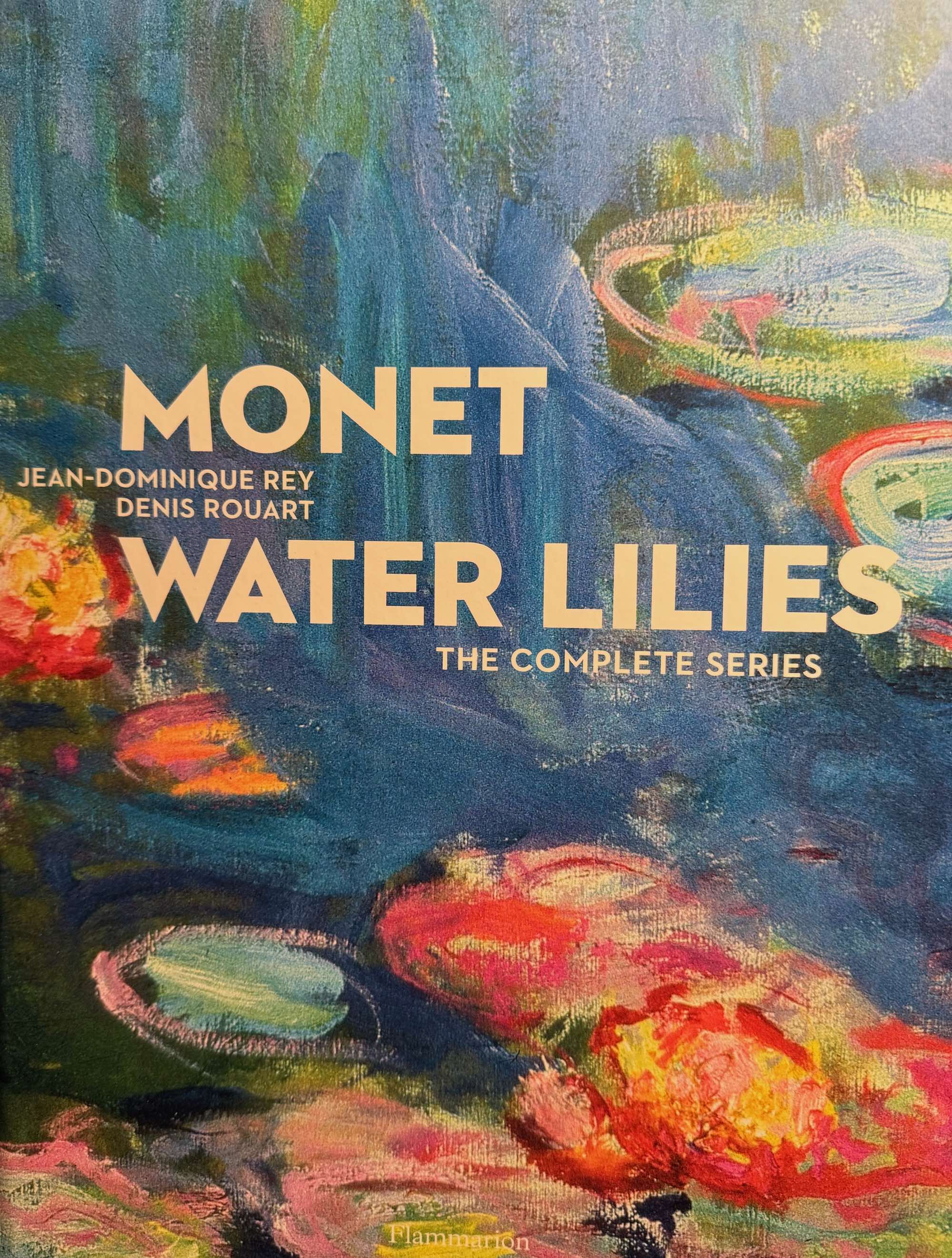


Getting this book means I can stare at the lilies as much as I have time for—it's unlikely I'll ever make it to France! Sometimes parts of a painting look clean and spare, with just a few colors, or very similar pastels that relax the eyes and and the mind. Other times, in dark areas, it looks almost brutal, heavily overloaded strokes of colors that don't seem to make sense, but still convey deep mysterious darkness, lifting up the lighter areas and maximizing their impact. I feel like he's using color as a structural material, and I get the impression that he didn't have any qualms at all about using whatever colors he wanted to, whether his eyes could actually "see" them in the subject or not.

I wanted to paint Haystack Rock in as impressionistic a style as I could manage; by that I mean I wanted it to be loosely done, with vibrant, engaging color and simplicity of shapes, using texture and light to evoke a sense of presence. It seemed to me that his approach on the lilies was to lay in the water first with unstructured strokes, mixing many hues of blues, greens, lavenders, and then more-or-less draw in the flowers and lily pads with dry-brushwork, layering strokes until he got the depth and mix of colors he wanted. He doesn't bother with small details, letting one stroke suffice wherever possible, implying rather than stating, which in his hands conveys not just the water and plants, but a three-dimensional space and the feeling of looking at the subject as if you were standing next to him.

Another modern who impresses me in the same way is Sargent; his economy of strokes really amazes me, and it's a skill I really aspire to. I've heard over and over that suggesting the subject and surroundings engages the mind of the viewer more than explicit detail does, and enhances their sensation of the painting; I believe that is the the way vision works--you can take in a whole scene or you can focus in on one thing at a time.

Now that this one's finished, I'm starting another Haystack Rock, so I can explore other color palettes and more water formations, hoping to get closer to that magic that Monet was such a master of.

Saturday, April 23, 2022

The challenges of painting clouds with softness and subtle color variations

Catherine Creek Cloudy Day

 I was at Catherine Creek State Park with a friend one March morning a few years ago when clouds were moving across the sky, blocking and then revealing the sun. We even got drizzled on for a bit, but had a lovely 2-hour hike through the basalt bluffs and weathered towers, with spring wildflowers blooming throughout the meadows and the oak trees still bare. I did one painting soon after that of Wankers Columns, but had several other photos I wanted to paint, including this one. When I took the photo, looking into the sun, I was really happy with the shapes and density of the clouds, framed below by this small rain-shaped gully bordered by rough basalt ridges and thin stands of white oaks.

But the photos themselves were complete duds, no color whatsoever in the clouds and the landscape completely silhouetted against the brilliant sky and almost-revealed sun. I loved the composition but hated the loss of color. For the years since, I knew I didn't have the skills to recreate the scene, with the brilliant spring grass and the subtle hues of the backlit clouds. In the last year, however, I've been practicing on clouds, working to develop a technique that would give me the look I wanted. I don't know how many times you have to paint a subject before you know it well enough to create it from your imagination, but that is my goal with my subjects, like the landscape and clouds here.

Acrylics have a lot of challenges in the best of circumstances, and more for slow painters like me. I have neither the experience nor the confidence to paint a new subject boldly and quickly, before the texture of the paint becomes either too dry, or too wet from trying to keep a mixed color from drying out over a period of several days--or weeks--while I work out the details of the composition. I almost never want to use the straight tube colors--I end up blending them, adjusting the value, and mixing colors freely with both their complements and their neighbors on the color wheel--whatever I have to do to get just the colors needed to work together.

I also like to layer colors to mix them. On this painting I used more than a dozen different mixes of gray, white, black, two blues, two purples, yellow, orange, and green to get the hues I wanted. And I frequently misjudge values, even with the reference photo on my iPad for the best color, and end up having to lighten or darken whole areas after I've painted them, to get the scene right. Sometimes it feels like I've painted the whole painting three different times, slowing bringing everything into the right balance.

My latest discovery has been that once I have the basic pattern of the painting done but the colors just aren't right, and they need just small adjustments, I can tweak them by picking a very small amount of paint on the right-sized brush, then wiping the brush gently on a piece of paper towel, so there's very little paint on the brush. With that, I can put the paint onto the canvas very carefully without it globbing or running, or me leaving so much that I have to wipe it off (which is also a useful technique.)Then, of course, I have to let that bit of paint dry so I don't smear it with additional strokes. That way, I can adjust the value or hue by small amounts. And when you do finally have the value relationships right, you can get amazing depth and subtle textures of colors.

Sunday, January 31, 2021

Learning to paint clouds

I made a commitment to try to learn how to paint clouds this winter. I'd like to get to the point where I know them well enough to be able to invent realistic looking clouds. My goal is to finish ten small cloud paintings. I've just finished my third and have started my fourth. I forgot to put the first two up here, so here they are. Both are of Spring clouds in the Columbia Gorge, looking north from the Oregon side of the Columbia River, in the vicinity of Tom McCall Preserve, west of Hood River.


It's all about the Composition


Goat Mountain Sunset

I've spent an awful lot of years learning to get the colors I want in a painting, and I'm getting good enough results now—not necessarily easily, but eventually—so it's time to get on to the next part of learning to paint: the paramount importance of composition, and how to create a good one. I take thousands of photos a year, and maybe 1% of them I recognize instantly as having a great composition. I've watched other people do value studies, and I've done some myself, but only a couple days ago, as I was contemplating what to paint next, I finally understood that it's during the value study that you adjust the composition until it acquires what it needs to attract attention. I always end up trying to fix the composition in the last third or less of the painting process, because I've been so focused the whole time on getting the colors right.

I frequently repeat the saying I read long ago, that "Painting isn't hard—you just have to get the right colors in the right places." So I was focusing on the right colors; now it's time to focus on the right placing.

I did a monotone value study for this last painting as the first stage, and I think it's been this experience that's made me fully absorb the process, and be able to think about it clearly. The study looked like this:

Then when I started painting over it, I first went with a blue violet palette, looking for something dramatic.

I decided I didn't really like that, and shifted more towards aqua hues, as I kept reworking the shapes and adding details, until I had the underpainting finalized.

And then I finished it, using a new trick to make sure I was capturing the composition that attracted me to the photo in the first place. I like to use my iPad as my color source now, but looking at an image that large (anything bigger than 5" on the short side) makes it really difficult to see the larger shapes—my brain just gets lost in the detail. So I print up a small image of the reference, no more than 4" on the long side, and tape it to the easel post right above the painting. When I stand back 8-10', I can easily compare the shapes in the painting to the shapes in the photo, and see how to fix things if I've gone wrong. Ta-da!

This view is not in the Columbia Gorge, it's from near Cornelius, at the edge of the coastal range.

Monday, January 29, 2018

I cheated on the big version

Underwood Fire, 7:14am

I finally got to making a larger, more finished version of the Underwood Packing Plant fire last October. I enlarged it to 18"x24", which gave me a chance to do a lot more work on the smoke clouds,  and the foliage detail in the left foreground (which still barely shows in the photograph). But after struggling with the proportions of the barn in my last painting I really wanted to get them right from the beginning in this somewhat historical subject. I didn't want to have to draw a grid and then paint it out, so I got out my old Artograph opaque projector and used that to draw in the outline from the photograph. I feel like it saved me my usual hours of re-drawing and repainting when I'm 3/4ths done with the painting and suddenly figure out that the angles or shapes or sizes of the elements are off enough to make the painting look awkward.

The bigger a painting is, the harder it is for me to get all the proportions and placements correct in the initial drawing. I feel like all the extra time and paint it takes me to fix those errors is a waste—I'm not getting any better at drawing on large canvases. If I were, it might be worth continuing to try drawing the outlines the hard way. I give up. I want to spend all that time working on the painting part, getting the colors the way I want them.

In fact, with plans for more large gorge paintings in the works, I decided to buy a relatively inexpensive digital projector with a bright LED lamp that I can use during the day, unlike my old Artograph. A preliminary test showed me that I can use it fairly easily in my studio, and I'll share more details on it when I start using it later this winter.

In the meantime, I'm starting a big abstract.

Monday, April 27, 2015

Painting the weather

Early Spring Clouds

I just finished two paintings of my local weather. The first one is from a photo I took from a fast moving car on an early spring plant-shopping trip a few years ago. I started working on this one last fall, but just couldn't get the clouds right until a couple weeks ago, when I stopped trying to do the whole sky in one session, and built it up over a few days. Painting clouds is one of the few times I almost miss painting in oils.

Snow Coming

The second one is from a drive home just as a snow shower was starting. I love the gray days and I love clouds and rain, and I hope I can get good at painting them. Wet weather is such a big part of living in western Oregon that to not paint it seems like a missed opportunity.

Friday, October 18, 2013

Two more cloud paintings, this time with landscapes

Afternoon Light

Hooray! The good weather came back for a really nice fall spell. The good news is that I got outside to paint again. The bad news is that I have to take time now to do as much work in my garden as I can, because when this good weather ends, that's most likely the end of it for this year. But I did get out for a few more plein air sessions, and chose to spend them in the northeast corner, looking at a bigger view. (I gave up on the ligularias for now. I'll play with them more in the studio this winter and see if I can make anything out of it. I did get good photos of the leaves while they and the flowers were still looking good, but I know when I'm in over my head.)

I set up in the new spot three days in a row at the same time each afternoon, and the clouds I painted were there on the first day. The first day I came away with what looked like an unfinished underpainting sketch. The second day I turned it into the ultimate in banal mediocrity, truly awful, laden with superfluous detail; it fairly screamed "Bleah!" The third day I attacked it with a larger brush and the intent to loosen it up, make more of the larger shapes, and force myself to go faster so I didn't overwork any of it. Ta-da! Success! It came back to life with a sigh of relief.

But when I looked at it again in the studio, there was a problem—the sky and the ground looked like two separate, unconnected paintings. It took me a couple days to figure out that it was a color issue. I had painted the clouds pure white because that's how they'd looked early in the afternoon when I started on the first day. But by the time I got around to painting the house and trees, I was seeing warmer, late afternoon light on the house, and trying to get the fall colors in the trees. So the sky looked cool, but everything else looked warm. In the studio, I painted over the clouds with the same pale yellow of the house, and that pulled the two parts of the painting together like a good zipper—it was one image now. But the next day I wasn't quite happy with the yellow; I was unable to recall ever having seen pure yellow clouds. So I tried pale yellow orange, and after I did the clouds, I used the same color to warm up the house a little bit. And that seemed to finally do it.

Clouds #12
I tried one more little cloud painting that week, this time on an 8x10 canvas panel. It was an exceptionally beautiful bunch of clouds—for about 3 minutes—then a huge gray mass blew in from the north to cover the whole sky, and it began drizzling. I took shelter under my woodshed overhang and kept trying to paint what I thought I had seen. Fortunately, I had my camera with me and had taken a shot right before I started painting. When I got back in the studio and looked at the photo, I hadn't even come close to getting the cloud shapes, so on the next day while it was raining, I tried doing a studio painting over the same panel from the photo. Like the other plain air painting above, it was awful. I tried two different color schemes for the clouds, and they were even worse. So I decided (a) it was too detailed, and (b) I'm no good (at least not yet) at making up cloud color schemes. I searched through my photos for an authentic color source for the clouds and, again, took a larger brush and worked over the painting as fast as I could, not worrying about the brushstrokes but just trying to get the colors and values right. Again, that approach gave me a much better painting. Not great, but not awful, either.

Monday, October 7, 2013

A Big Sunset

Winter Sunset

Last week I was working inside for a few stormy days. I've had a big figure study sitting on my easel for about a year that I finally gave up on, and decided to see if I could have fun painting a big cloud painting on it instead. The reference was a photograph I got early last winter of a particularly colorful sunset, taken from here in my yard.

I did have a lot of fun painting it, because thanks to my back-yard cloud painting this summer I was able to keep it loose and relaxed. I worked on it for three days and spent a fair part of that time working out the landscape at the bottom. I wanted to have it create a setting for the view without competing or conflicting with it. This was the most vibrantly colored sunset I've ever painted, and it was fun working out how to get the right colors. When looking at the darks of the clouds in the photograph, I at first thought they had violet in them, but when I carefully analyzed them, I found out I could most closely match them with a mix of Napthol red and medium gray. That was a surprise. I never used grays much before I started doing clouds this year. Turns out they're pretty useful.


I spent most of this last weekend expanding and improving my Etsy shop. I've put up almost all my available works, from my small matted landscapes to my big ink abstracts. For now I'm focusing on my paintings, and I'll be adding more as I complete more works and figure out how I want to ship the large stretched canvases that I have. I'm not doing much with glass for now, but as I do more of the mobiles this winter, those will go up there too.

Sunday, September 22, 2013

A fantastic cloud-painting day

What a day it was yesterday! We had a good little rain at lunchtime, then mixed clouds and sunshine through evening. I went out with my paints at 4:30 and the clouds looked good, so I made a cloud painting.

Clouds #9

Just as I was finishing it, the clouds went into a more beautiful arrangement. I thought, why not? and took the first one up to the house and started a second.

Clouds #10

And when I finished that one, they were even more dramatic, so I went on to a third. I could tell I was getting tired by then, this one looks more imaginary.

Clouds #11

After I finished the paintings, the light was going dim but the sky was still bright and the clouds were gleaming gold. I stayed down in the garden, picked some fruit, and walked the fence, taking photographs as the evening came.

This morning I'm thinking about how the good one happened, and it’s all so uncontrollable. The only thing your thinking mind can do is set you up for success and then get out of the way. It’s how much paint you have on your brush, it’s the momentary, constantly changing mix of colors on your palette, and what sequence you make the brush strokes in. It’s all those things you can’t possibly keep track of, so you stop thinking, and just let your intuition guide you. And stop painting, the first moment you can, so you don’t ruin the good stuff you’ve made.


Wednesday, September 18, 2013

Slow progress

After 5th session
It turns out that I picked a really difficult subject in this ligularia and the complex background behind it, but I am slowing making progress. Good thing, because the nice days of painting outside are coming to an end soon. The things that make the ligularia a really choice subject are the same things that make it really a bugger to paint—those big, reflective, undulating leaves, with their visible veins. They're a lot like painting drapery, they are so smooth and curvy and show so many different shades and hues of reflected light, and I have pretty much no experience whatsoever painting drapery. But today I felt like I finally found a good mix of colors to use for the background. The painting is a long way from done still—especially the ligularia leaves—but at least I like the mix and general arrangement of colors.

My previous experiences doing plein air painting, before I started painting in my garden, were with groups who would drive somewhere, paint for a few hours, then leave and come home. I wasn't anywhere near good enough nor quick enough to paint anything worth keeping, so it became ultimately something I had no interest in doing. However, being able to go out almost every day to the same spot and work, not have to schlep the larger pieces of equipment, and be able to take some amenities out with me, like my ipod loaded up with great music, is so different it doesn't even seem comparable. I really enjoy my sessions outside. I always give myself the first five minutes or so to relax, settle into the garden, and remember how much I love being outside in it on nice days. That always puts me in a good mood, and then I start looking at the painting, looking for where I can make headway on it that day. Although I never would have tried the ligularia if I had realized how long it was going to take me, at my stage there is no painting that doesn't help my skills, no matter how slow it goes.

As my summer painting winds down to its inevitable end, it seems that I've learned a fair bit about what colors my plants show in outdoor light, and I expect that knowledge to improve my studio painting this winter. I've had so much fun doing this I'm going to really miss it when it gets cold, and I'll really be looking forward to being able to go out again when the weather gets friendly enough next spring or summer.

Clouds #8

This cloud painting I did two days ago. I got a late start and as a result, got to see some sunset hues on parts of the cloud masses.

Outdoor setup

I'm including a photo of my setup, luxurious as it is. The cloth chair with foam padding in the seat and back is one of the most comfortable outdoor chairs I've ever had, and it makes a great painting seat. The purple bucket on the ground is what I use to carry paints, water, brushes and paper towels down from the house. It works great.

Tuesday, September 3, 2013

How fast do clouds change?

I had another great day painting today. I'm still working on my latest barn painting. For the last two days, when I stopped painting on it outside, I thought it was done; today I even signed it. But when I brought it inside and look at it, I knew it's not quite done yet. Maybe tomorrow. While I was working on it, the clouds in the east were slowly building and changing, so I could do another cloud painting today. I had been taking photos of them changing, and they made a constantly shifting panorama.

Clouds #7
I had used up my cheap, 12x16" canvas pad, so I took down a 9x12" Fredrix canvas pad. I decided almost immediately that small is good when you're painting a moving subject. And I took a slightly different approach, after painting a real POS yesterday, so bad that I'm not going to post it. There was so much blue sky today that I decided to sketch the outlines quickly of the separate clouds, and fill in the sky between them first. That meant that I basically chose my composition first thing and stuck with it, despite how the clouds changed, just using the later clouds for color and texture reference.

I kept taking photos, just for fun, just to see how fast the clouds were changing. I took the first one right before I started sketching the outlines, the second as soon as I finished the sketch and started painting, and the last one when I stopped painting.

When I began sketching

3 minutes later, done sketching

28 minutes after beginning, done painting

What fun!

Friday, August 30, 2013

Running with the rain clouds!

Clouds #4

Yesterday was a fantastic cloud day. It was showering in the morning and I had every reason from the weather forecast to think that the cloud painting would be great that afternoon. I went out about 3pm and decided to set up first on the north side of the back. The wind was blowing NE, and the fastest direction of my two options was looking north. I knew it would be a challenge, but I had no idea how much. It was like being in two different races at the same time. The clouds were changing shape faster than a speeded-up lava lamp while they were blowing left to right like a train going by. I watched for a couple minutes, just to try and get a feel for it, then I picked a couple big clumps that didn't seem to be changing too quickly, and started throwing on paint. I couldn't even begin to keep up, and after a couple minutes I was just trying to pick shapes and add them in. After I got sort of a structure on the canvas, I started filling it in, one area at a time, trying to be sort of faithful to what was in front of my eyes at that moment. When it was mostly done, I switched over to looking at each mass on the canvas and then trying to find something like it in the sky, and use that as a guide to finish rendering it. I ended up having to invent a lot more than in my previous paintings, and my skills at this point fell short of being able to do that. But it was still a lot of fun, and a great experience, maybe like running the bulls at Pamplona, only I came out of this alive. Tired, but alive.

Clouds #5

As soon as I covered that canvas I took it up to my house and moved my setup back to my familiar eastern view and started again. This time the wind was blowing right to left, and not quite as fast as in the first spot. I did the same thing, just watched them for a few minutes, then grabbed a clump and jumped in. It was just the same as the first time—painting as fast as I could, throwing the paint on, grabbing the most interesting shapes and getting the proportion of white to midtones to darks to represent what they looked like in the sky. I did one smart thing and took a couple photos, just a minute apart, once I had sort of a composition. It ended up the same way, with me trying to improvise a finish when everything I'd started with in the foreground had long since disappeared. And I can see that inventing in both these paintings, and it makes them different from the previous three, which were much closer to what was actually there.

You can't really tell in these paintings, but each view had a different feel as I watched. In the north, the big shapes seemed much closer, and the lower clouds resembled them, just farther away. In the east, I'm looking up toward the Cascades, and I can see the darkest undersides of the cloud masses higher up over the foothills.

I can't remember EVER having such an exciting day painting! As relaxing as it is to paint clouds that are less mobile, painting them when they're this dynamic is absolutely exhilarating. I will certainly jump at the chance to do it again.

This morning I referenced the photos I took yesterday and corrected an ugly spot in each of the paintings.

Thursday, August 29, 2013

A simple one I like

Barn #3
Third time is seeming like the charm for my barn paintings. I painted from the same location but used a slightly different view, and this one finished up in one two-hour session, plus ten minutes the next day to tweak a couple things to strengthen the composition. I started out with a plan to just paint in the major blocks of color first, thinking that would be my underpainting that would set the mood and tone of the painting—but it ended up being the painting. There's a lot less detail, but plenty of texture, and the feeling is fresh, spontaneous, and alive. Nothing over-thought or over-worked. The cold press surface of the unprimed paper really contributes a lot of texture.

The first day, there was more lighter-colored foliage in the firs, and the background brush in the left center was lighter, with no texture. The second day I made all the fir branches uniformly dark, and that balanced the mass of the barn better. I also added some darker tones and a bit of texture to the brush, and that unified the shapes more.

I'm still doing cloud sketches. They really are a great way to just unwind. All the ones so far have been looking just north of due East, toward Mt. Hood and the Gorge.

Clouds #2
This was a bit later, getting towards evening, when more colors were appearing in the clouds.

Clouds #3
This was a bit earlier in the afternoon. It's a really common configuration when we have moist air coming up from the South, and rain clouds build up over the Cascades.

Monday, August 26, 2013

More plein air

Barn #2

After I finished the first plein air painting, I decided I wasn't happy with it for a couple reasons, even though it seemed a huge improvement over my last one, last year. First, I don't like how dark it is overall, and second, it's way more realistic than I want. It was great practice, but it's not even close to being as good as my best studio work. I looked around for other places to paint but decided to keep working with the barn, try acrylics, and try a limited color palette that I've worked with before.

I started with a one-color value sketch, and each day I added a color or two, gradually building up detail and trying to capture the colors in the scene without overworking it. I stuck with a larger brush for just that reason.

On the next to last session, when I'd done as much as I could without letting the paint dry, I had too much paint left, and the sky was full of paintable clouds. I got a pad of cheap canvas sheets (the one I've mentioned previously) and made an attempt at the clouds, painting as quickly as I could because they and the light were changing every minute. It took me about 15 minutes to get them as well as I could. I haven't had that much fun painting in a long time, and it was a great way to unwind after a session.

Clouds #1

Today I had the pleasure of painting in a pretty good breeze. Every few minutes, a new dusting of fir needles and pollen flowers came down on everything—the palette, the water tub, and the painting. I picked off the big lumps and kept going. By the time I felt that I was done with the painting, the breeze was getting stronger, so I skipped trying any clouds today.


I think I've spent about the same number of sessions as on the first one, and I think I'm done with it today, although I might tweak it a little more. I feel as though I'm making progress, but the big deal for me is that this is the first time I've ever really enjoyed plein air painting. Time to go on to the next one.

Sunday, November 11, 2012

Painting for FUN!


I've been painting for fun these last few days. I really wasn't happy with the river painting the day before, and I felt most of the problem with it was the colors. I wanted to try a different color scheme on it, so I painted over it. It had the effect of simplifying a lot of the textures and making fewer, larger blocks of color, which I definitely like better.

Early this fall I was out in the front yard just after sunset and looked up to see this long, sunlit clump of cloud framed by two stands of firs. The shape and the glow reminded me a little of the Milky Way arching across the sky, so I ran in and got my camera and shot it. I first tried a wash sketch, but wasn't happy with that so I painted over it with thicker paint. I had fun doing it. The shorter trees at the bottom look a bit cartoonish, actually the whole thing does, but it was fun doing it.

I don't know why I've been having so much fun with these, but maybe it had something to do with having already given up on them being any good! I started playing with another image I've had for a while, of one of my favorite daylilies. I don't think this one is done yet.


I'm trying to keep it loose, but get a good, balanced composition. I didn't notice till I had the color on it how unsymmetrical the smaller, outer petals are, and I don't know how that will affect the final appearance.